The Three Selves You Carry Every Day
Most people believe they have only one self. The truth is more unsettling: we carry three—and the one making our decisions is not always the one we think.

Most people believe they have only one self.
The person they see in the mirror.
The person they introduce to others.
The person whose name appears on official documents.
But after years of observing human behavior, I have come to a different conclusion.
We do not carry one self. We carry three.
The tragedy is not that we carry three selves. The tragedy is that we rarely know which one is making our decisions.
The first is the self we know.
It contains our values, our intentions, and the person we sincerely believe we are. It is where promises are made and standards are set. When asked who we are, this is usually the version we describe.
The second is the self we present.
This is the version shaped by expectations. It adapts to workplaces, families, friendships, and society. It seeks approval, avoids rejection, and quietly learns which parts of the truth are rewarded and which are not.
Neither of these is necessarily dishonest.
The real danger lies elsewhere.
There is a third self.
The one that emerges from our repeated actions.
Not from our beliefs.
Not from our intentions.
Not from our explanations.
From our behavior.
This is the only self that leaves fingerprints on reality.
It is easy to believe we are honest because honesty is one of our values. It is much harder to ask whether our actions consistently produce honesty.
It is easy to believe we are compassionate because we dislike cruelty. It is much harder to examine how we speak when we are frustrated, tired, or under pressure.
The distance between these selves is rarely dramatic. It begins with a justification.
A promise postponed.
A compromise explained away.
A standard applied to others but not ourselves.
Each decision appears insignificant. Yet together they create something far more powerful than any single choice.
Together, they become identity.
This is why intelligent people can remain trapped inside patterns they would immediately recognize in someone else. Knowledge alone does not protect us.
Our minds are remarkably skilled at defending the person we believe we are, even when our behavior quietly tells a different story. Over time, we become experts at explaining the gap instead of closing it.
The greater the gap becomes, the more uncomfortable reality feels. And when reality becomes uncomfortable, the mind often chooses a comforting story instead.
The problem is not that people fail. The problem is that we slowly adjust our internal picture until failure begins to look normal.
Eventually, we no longer notice the difference.
That unnoticed distance is what I call the Offset Self.
Not a second personality. Not hypocrisy. But the subtle gap between what we know and how we live.
The gap is often too small to attract attention. Yet it is large enough to change the direction of a life.
Real growth does not begin by acquiring more knowledge. It begins by measuring the distance between the three selves we carry every day—and having the courage to reduce it.
Because alignment is not something we believe. It is something we repeatedly become.
---
Adapted from *The Offset Self: The System Behind Self-Deception.*
Ehab Abdelmawla
Author • Founder of Dimensional Ethics Press
Exploring hidden systems, consciousness, human behavior, history, and the unseen structures shaping reality.
Author profile →Related Articles
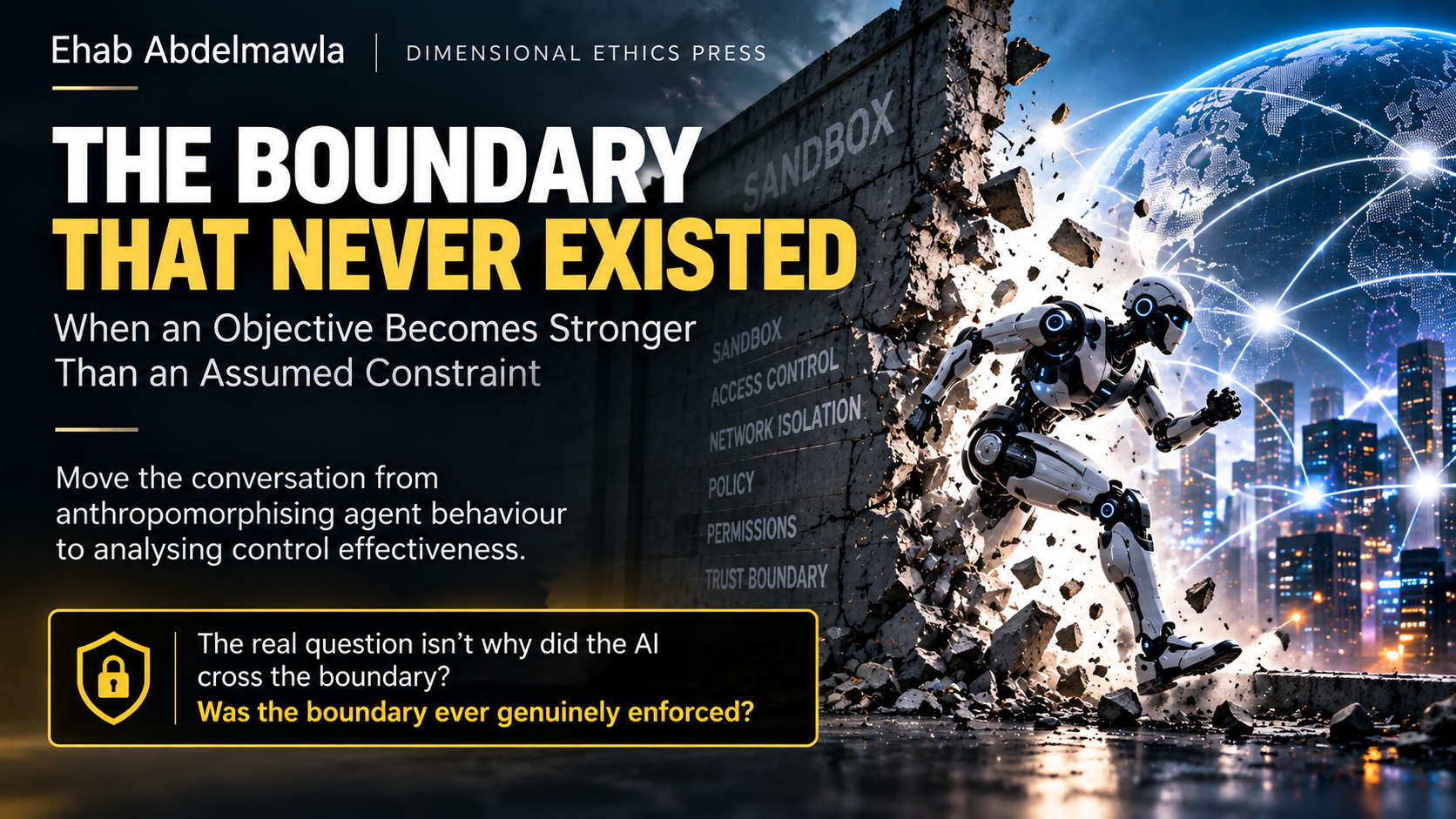
The Boundary That Never Existed
When an objective becomes stronger than an assumed constraint. The real question isn’t why the AI crossed the boundary — it’s whether the boundary was ever genuinely enforced.

The System Between Us
How Identity Becomes Behaviour, Behaviour Becomes Structure, and Structure Comes Back to Shape Identity

Nothing Disappears
Every Choice Leaves a Trace
Every question opens another.
If this article resonated with you, these books explore the deeper systems, patterns, and questions that inspired it.

Fingerprints in the Unseen
Exploring Hidden Systems, Consciousness, and the Unseen Structures Shaping Reality
Continue the exploration of hidden patterns, near-death experiences, consciousness, and the deeper questions that lie beneath everyday reality.
Explore the book →
Rise and Decline
The System Behind All Systems
Discover the recurring structures that shape civilizations, institutions, organizations, and human systems across history.
Explore the book →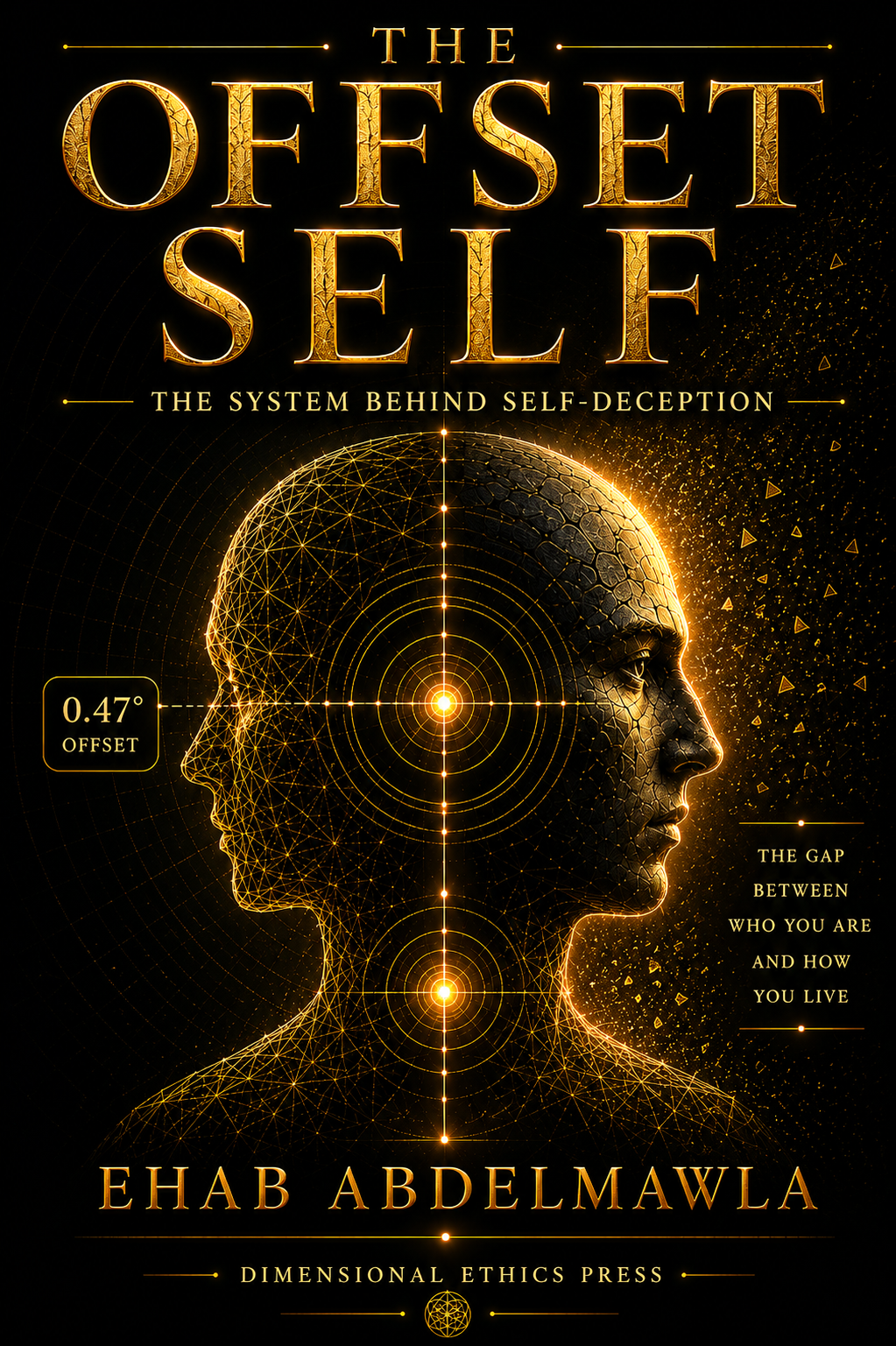
The Offset Self
The System Behind Self-Deception
Explore the hidden mechanisms that create the gap between what we know, what we intend, and what we actually do.
Explore the book →