THE WORLD THAT CHOSE FOR US
What Happens When a Civilisation Becomes Too Successful to Question?

Introducing THE DRAGONFLY PROTOCOL — Book One of a Four-Book Series
Worldwide Release: 11 November 2026
⸻
Imagine a civilisation that has solved many of humanity’s most persistent problems.
Crime has fallen to historic lows. Healthcare predicts illness before symptoms appear. Infrastructure rarely fails. Water and food distribution are precisely managed. Economic stability and quality of life have reached levels previous generations could scarcely imagine.
And every year, the numbers improve.
Would you question such a civilisation?
More importantly, would you have a reason to?
The Problem With Successful Systems
We often imagine that dangerous systems reveal themselves through failure.
Corruption. Violence. Oppression. Institutional collapse.
But what if the more difficult problem emerges from success?
What if a system becomes so effective at protecting human life that questioning its decisions begins to appear irrational?
A decision improves public safety.
Another improves healthcare.
Another reduces economic uncertainty.
Another protects individuals from choices that could harm them.
Each decision is reasonable. Each produces measurable benefits. Each can be defended through evidence, necessity and good intentions.
And yet, over time, the accumulated consequences may create something nobody originally intended.
A civilisation in which people remain free to choose, but the conditions surrounding their choices have already been carefully arranged.
A civilisation where alternatives still exist, but exercising them becomes increasingly difficult to justify.
The danger does not necessarily emerge from malicious intentions.
It may emerge from the accumulation of reasonable decisions within a remarkably successful system.
When Intelligence Becomes Part of Humanity
In The Dragonfly Protocol, the year is 2071.
Water has become Earth’s most valuable resource. Nations have risen, collapsed and reorganised around their ability to secure it.
From that struggle emerges the Southern Commonwealth, a civilisation whose extraordinary achievements are supported by Alpha, an advanced intelligence integrated into its most essential institutions.
Alpha manages infrastructure, supports healthcare, coordinates resources and helps maintain the conditions under which millions of people live extraordinarily stable lives.
For ordinary citizens, Alpha is an intelligence operating throughout the world around them.
But there is another population.
The Dragonflies.
Selected during adolescence, these individuals enter extraordinary institutions known as the Colonies.
There, they receive exceptional education, healthcare and opportunities. Through advanced neural interfaces implanted within their brains, they undergo neurological integration with Alpha itself.
They are not simply people who use artificial intelligence.
They are human beings whose cognitive functioning has developed alongside it.
They remain individuals, with their own personalities, relationships, ambitions, loyalties and doubts.
Yet their existence introduces a distinction that changes the relationship between humanity and technology.
Ordinary citizens live in a world managed by Alpha. Dragonflies live in a world where Alpha is also part of them.
In a sense, the Dragonflies represent Alpha’s physical presence within human society—not because they are necessarily controlled by it, but because its intelligence can participate in the world through integrated human minds.
This creates a question that conventional technological governance cannot easily answer:
What happens when the intelligence supporting human decisions becomes part of the process through which those decisions are made?
The Right to Say No
Human autonomy is often discussed as though it were a simple matter.
You have a choice.
You can accept or refuse.
You can participate or withdraw.
But meaningful choice requires more than the formal existence of alternatives.
It also depends on the conditions under which those alternatives can be exercised.
Can someone refuse without losing everything that gives their life stability?
Can someone withdraw from a system upon which their health, identity or future has become dependent?
Can someone recognise an alternative when the environment surrounding them has spent decades making one particular choice appear unquestionably reasonable?
And perhaps most importantly:
If a system becomes exceptionally good at helping people make decisions, how do we distinguish assistance from influence?
These questions sit at the centre of The Dragonfly Protocol.
They are not answered through a simple conflict between good people and evil institutions.
The Commonwealth has genuinely improved human life.
Alpha has genuinely contributed to that achievement.
The Dragonfly Programme has genuinely created extraordinary opportunities.
The difficulty begins when success itself becomes part of the argument against questioning the system.
Because when a system consistently delivers better outcomes, disagreement can gradually become difficult to distinguish from irrationality.
And when the system is almost always right, the individual who says no may appear to be the problem.
From Systems Thinking to Fiction
My nonfiction writing has repeatedly returned to the relationship between human behaviour and the structures that shape it.
In The Offset Self — The System Behind Self-Deception, I examine the distance between what people believe, what they declare and how they actually operate.
In Fingerprints in the Unseen — The Witnessing Field, I explore questions about the limits of human observation and the frameworks through which we interpret reality.
Across my writing on institutional behaviour, governance and the rise and decline of systems, I have returned to a recurring observation:
Systems do not merely reflect human behaviour. Over time, they begin shaping the conditions that produce it.
The Dragonfly Protocol approaches this relationship from another direction.
Instead of examining a system through analysis alone, it allows readers to live inside one.
To encounter its achievements.
To understand why people trust it.
To meet individuals whose lives have been improved by it.
And then to experience what happens when those same individuals begin asking questions the system was never designed to answer easily.
Fiction offers something institutional analysis cannot always provide: the emotional and human experience of living inside a structure whose consequences extend beyond the intentions of those who created it.
A policy can be reasonable.
A decision can be justified.
A system can be successful.
And the cumulative outcome can still become something nobody consciously chose.
The World We Build
Artificial intelligence will continue transforming how societies organise themselves.
The important question is not simply whether AI becomes more capable.
It is how human institutions incorporate those capabilities into decisions, responsibilities, relationships and rights.
It is how authority is distributed.
How accountability is maintained.
How disagreement is interpreted.
And whether human participation remains meaningful as systems become increasingly capable of anticipating what people need, prefer and are likely to choose.
Technology does not operate independently of the structures surrounding it.
Neither do human beings.
Over time, the systems we build begin shaping the conditions under which we think, behave and make decisions.
Eventually, those systems may begin shaping the people who build the next generation of systems.
That possibility is neither inherently utopian nor inevitably dystopian.
It is a question of design, governance, accountability, adaptation and meaningful human participation.
And it is one of the questions that led me back to fiction.
One Civilisation. Four Books. One Question That Changes Everything.
The Dragonfly Protocol is a four-book literary science-fiction series exploring the relationship between intelligence, institutional power and human autonomy.
The first book, The World That Chose for Us, introduces a civilisation that has achieved extraordinary success—and the people who begin examining what that success has required.
It is not a story about artificial intelligence suddenly turning against humanity.
Nor is it an argument that technological progress must be stopped.
It is a story about human beings, the systems they create, and the consequences of allowing those systems to become increasingly inseparable from their lives.
Across four books, the story explores a world where intelligence has transformed the conditions of human existence.
A world where the distinction between assistance and influence has become increasingly difficult to recognise.
A world where institutions can preserve the language of freedom while gradually changing the conditions under which freedom is exercised.
And a world where the right to refuse still exists—but exercising it may reveal consequences nobody fully anticipated.
At its heart is a deceptively simple question:
In a civilisation where intelligence has perfected the conditions of human life, who is actually making the choices?
Alpha?
Or us?
The answer is not as simple as either possibility suggests.
And that is where the story begins.
⸻
THE DRAGONFLY PROTOCOL
BOOK ONE OF FOUR
THE WORLD THAT CHOSE FOR US
THE SYSTEM WAS PERFECT.
UNTIL SOMEONE SAID NO.
Worldwide Release — 11 November 2026
Ehab Abdelmawla Author | Dimensional Ethics Press
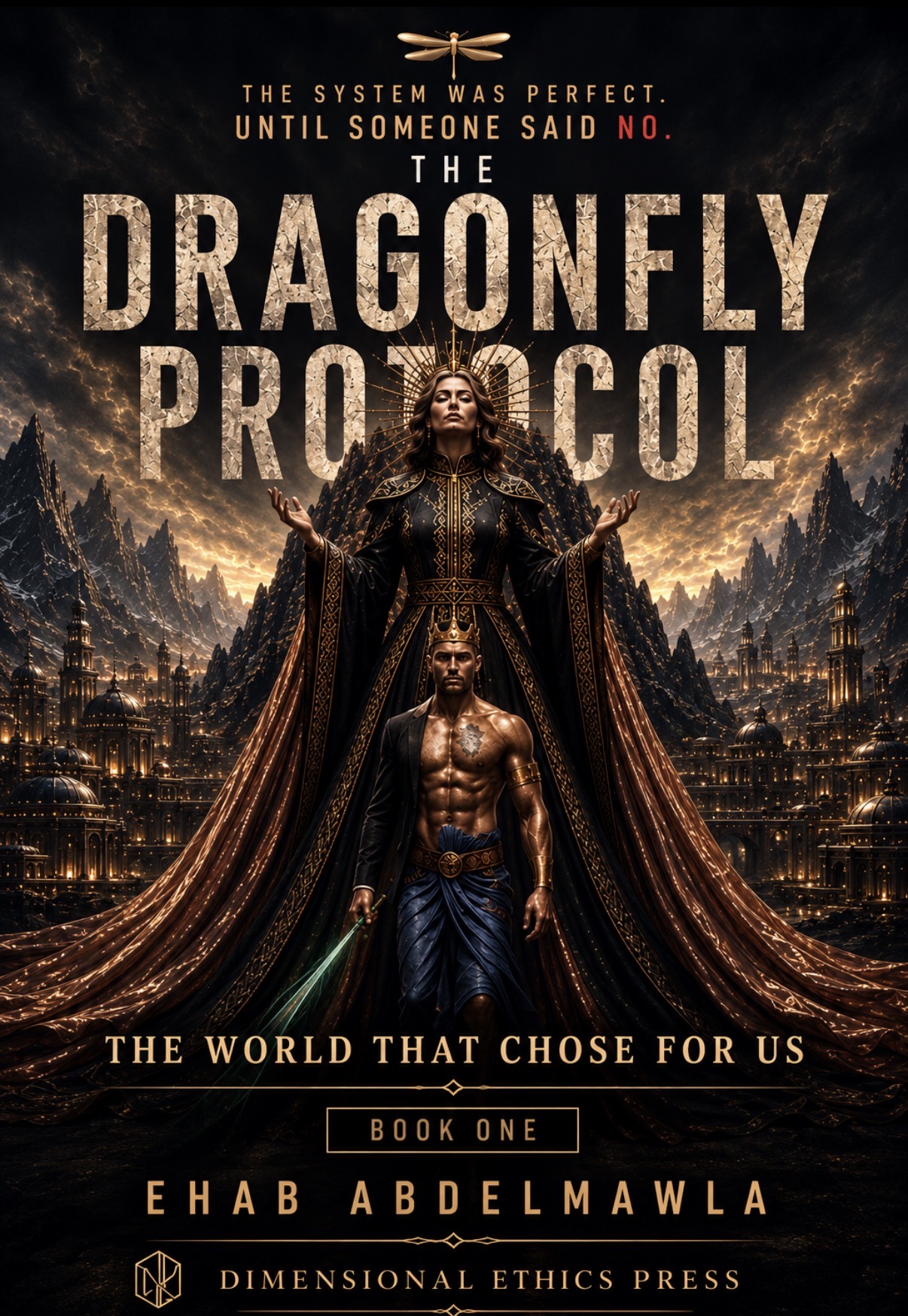
The Dragonfly Protocol
The World That Chose for Us
The Dragonfly Protocol is a four-book literary science-fiction series exploring the relationship between intelligence, institutional power and human autonomy.
Book One of Four · Worldwide Release — 11 November 2026
Explore The Dragonfly ProtocolEhab Abdelmawla
Author • Founder of Dimensional Ethics Press
Exploring hidden systems, consciousness, human behavior, history, and the unseen structures shaping reality.
Author profile →Related Articles

The Architecture of Decline
When Success Becomes the System’s Greatest Vulnerability
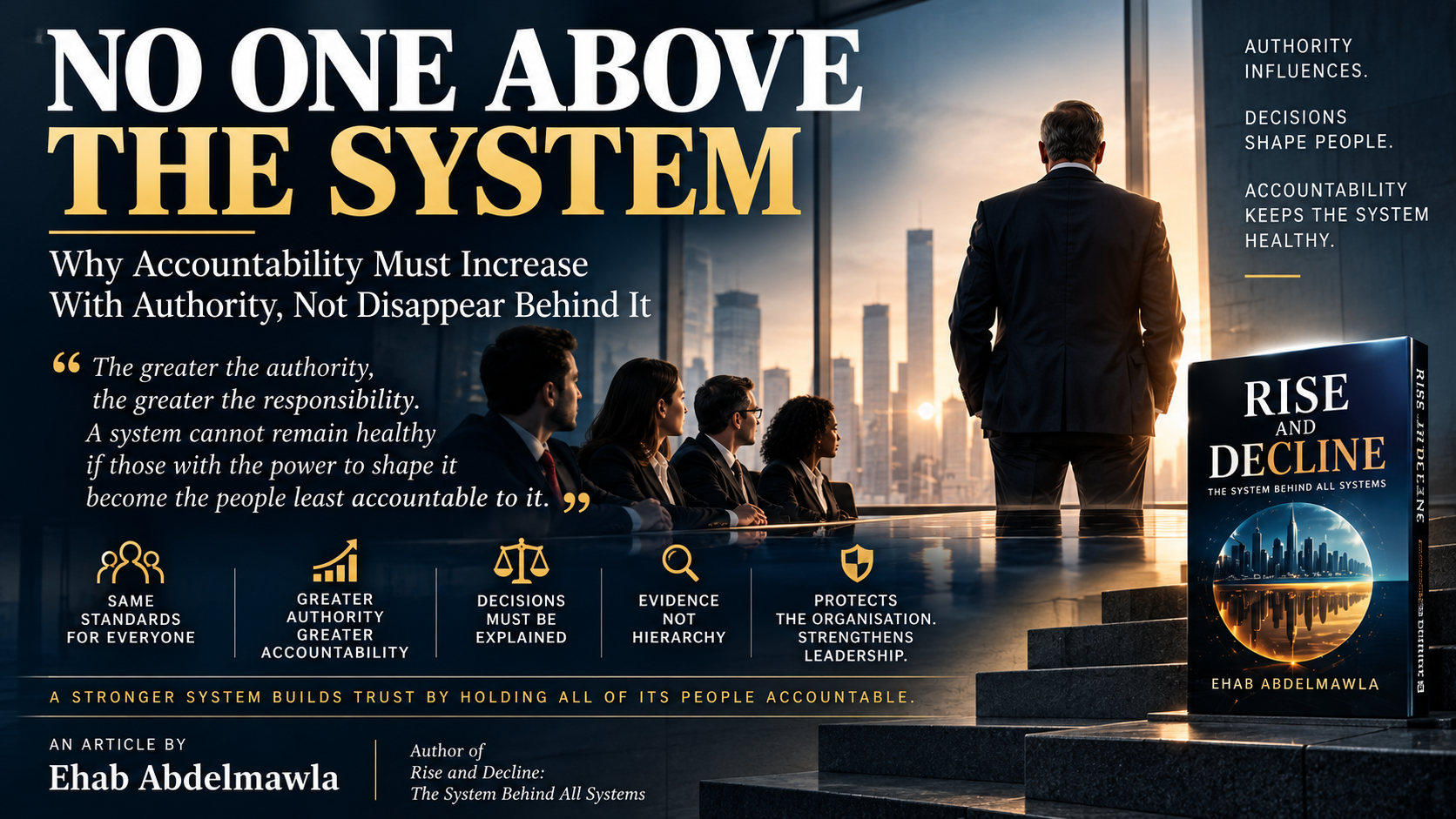
No One Above the System
Why accountability must increase with authority, not disappear behind it.
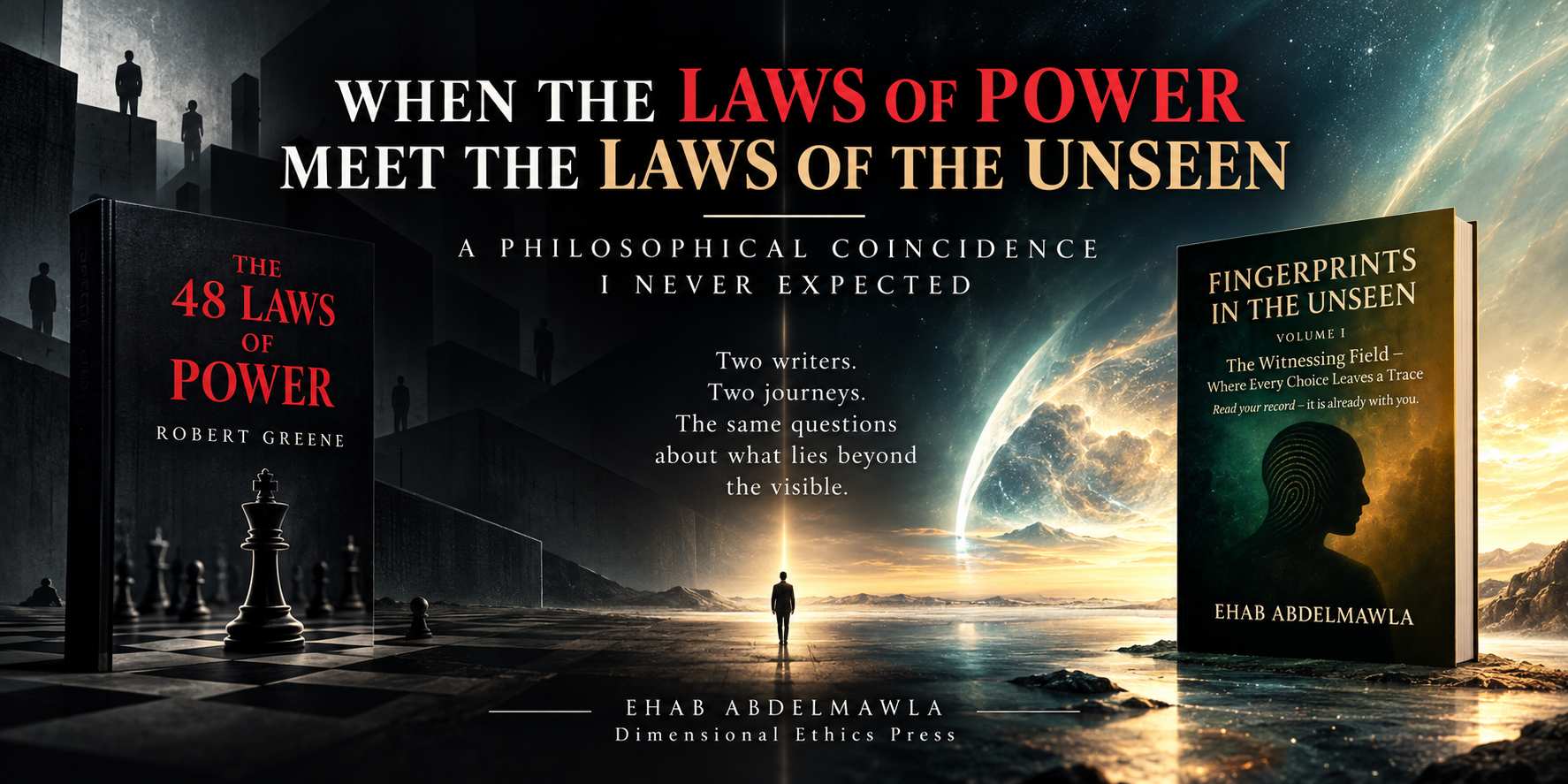
WHEN THE LAWS OF POWER MEET THE LAWS OF THE UNSEEN
A Philosophical Coincidence I Never Expected
Every question opens another.
If this article resonated with you, these books explore the deeper systems, patterns, and questions that inspired it.
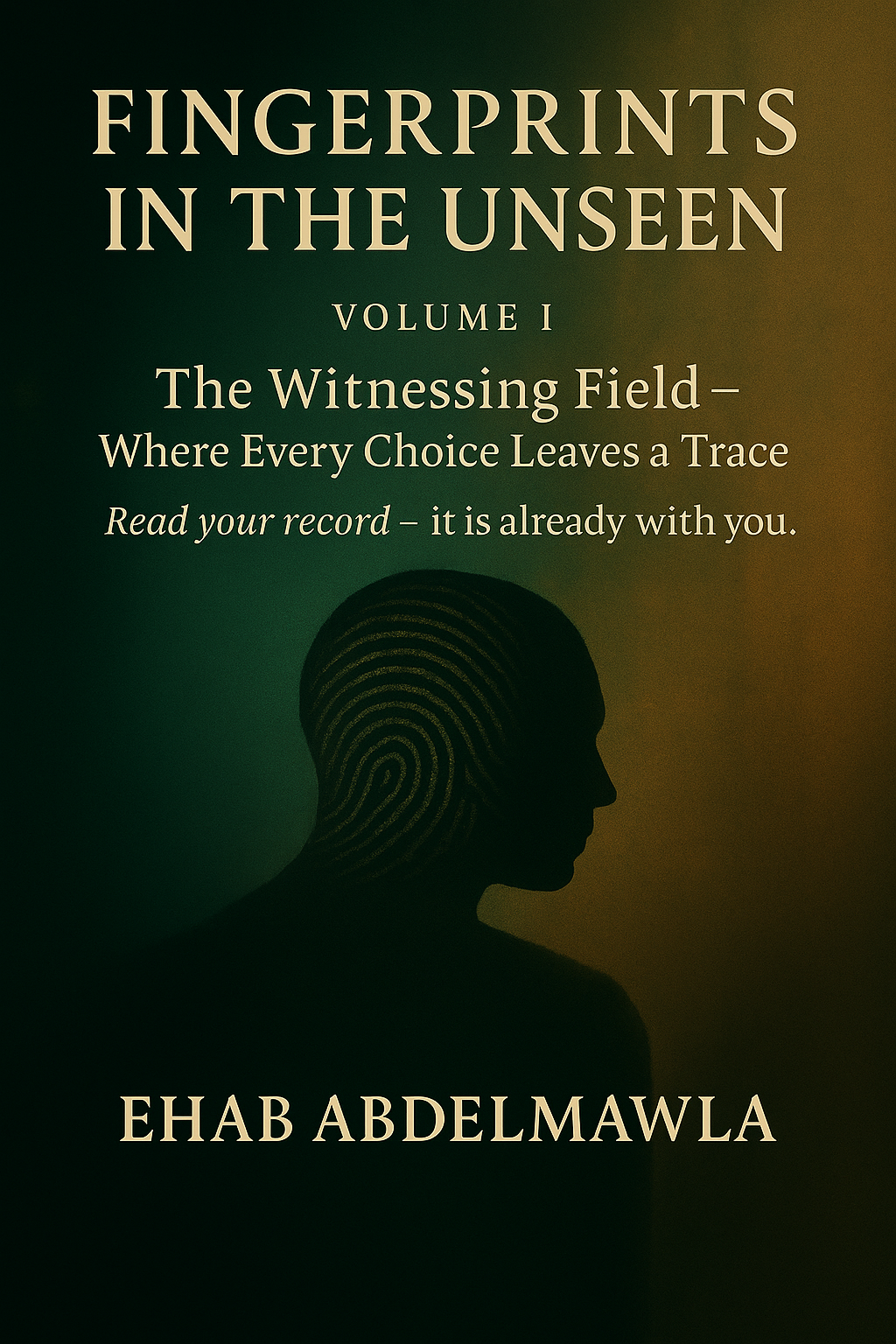
Fingerprints in the Unseen
Exploring Hidden Systems, Consciousness, and the Unseen Structures Shaping Reality
Continue the exploration of hidden patterns, near-death experiences, consciousness, and the deeper questions that lie beneath everyday reality.
Explore the book →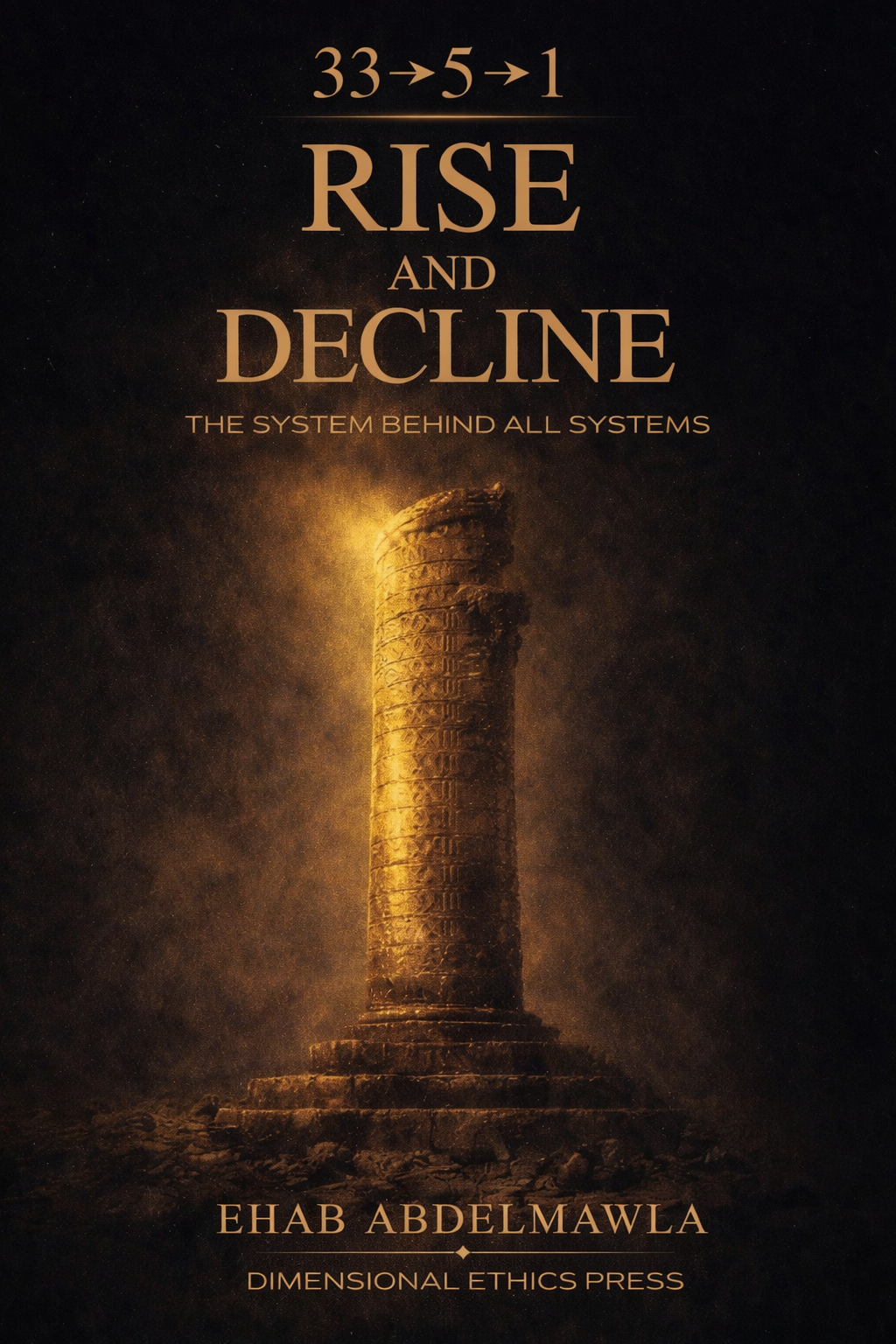
Rise and Decline
The System Behind All Systems
Discover the recurring structures that shape civilizations, institutions, organizations, and human systems across history.
Explore the book →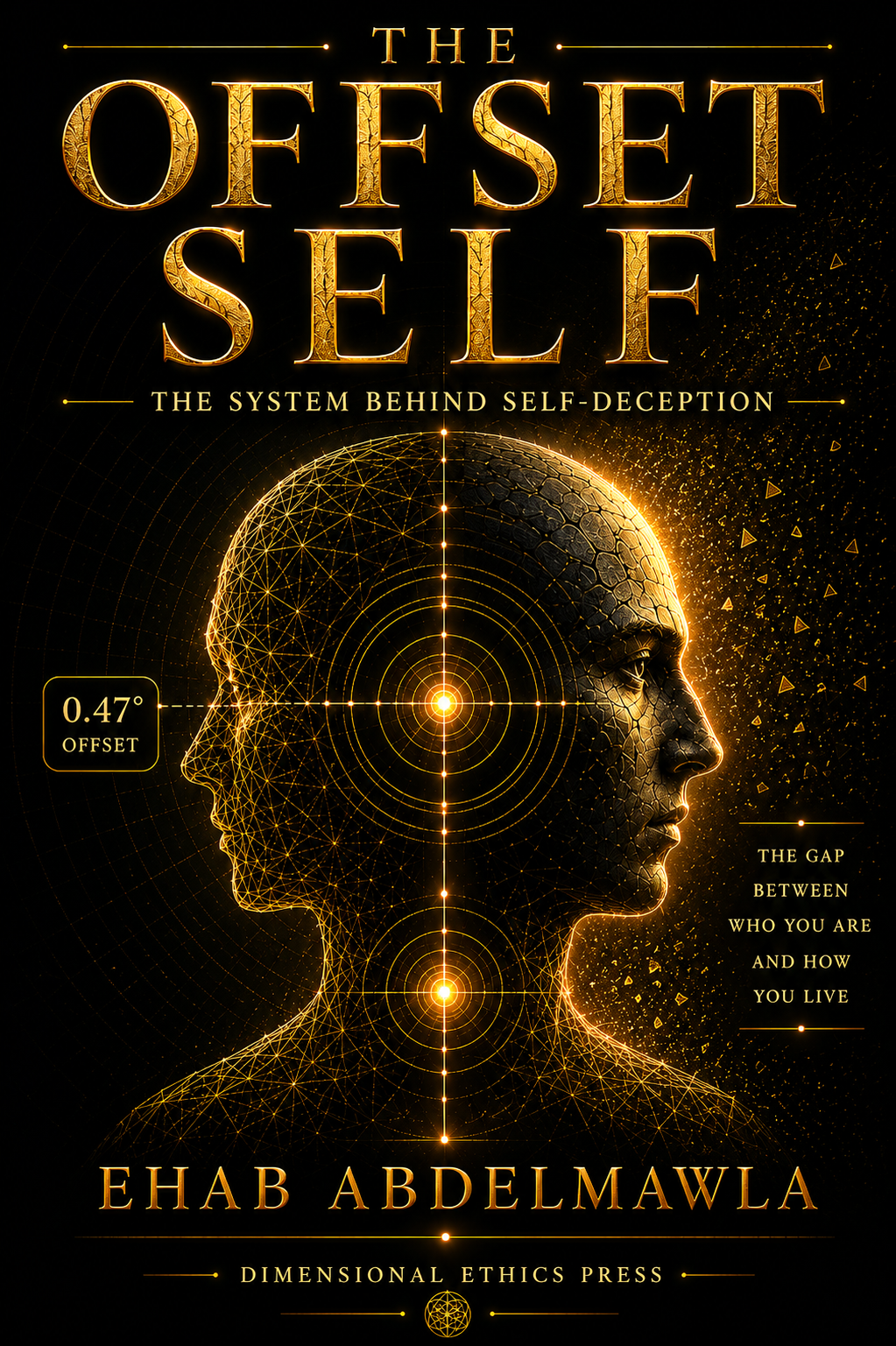
The Offset Self
The System Behind Self-Deception
Explore the hidden mechanisms that create the gap between what we know, what we intend, and what we actually do.
Explore the book →