The Hidden Drama Inside Every System
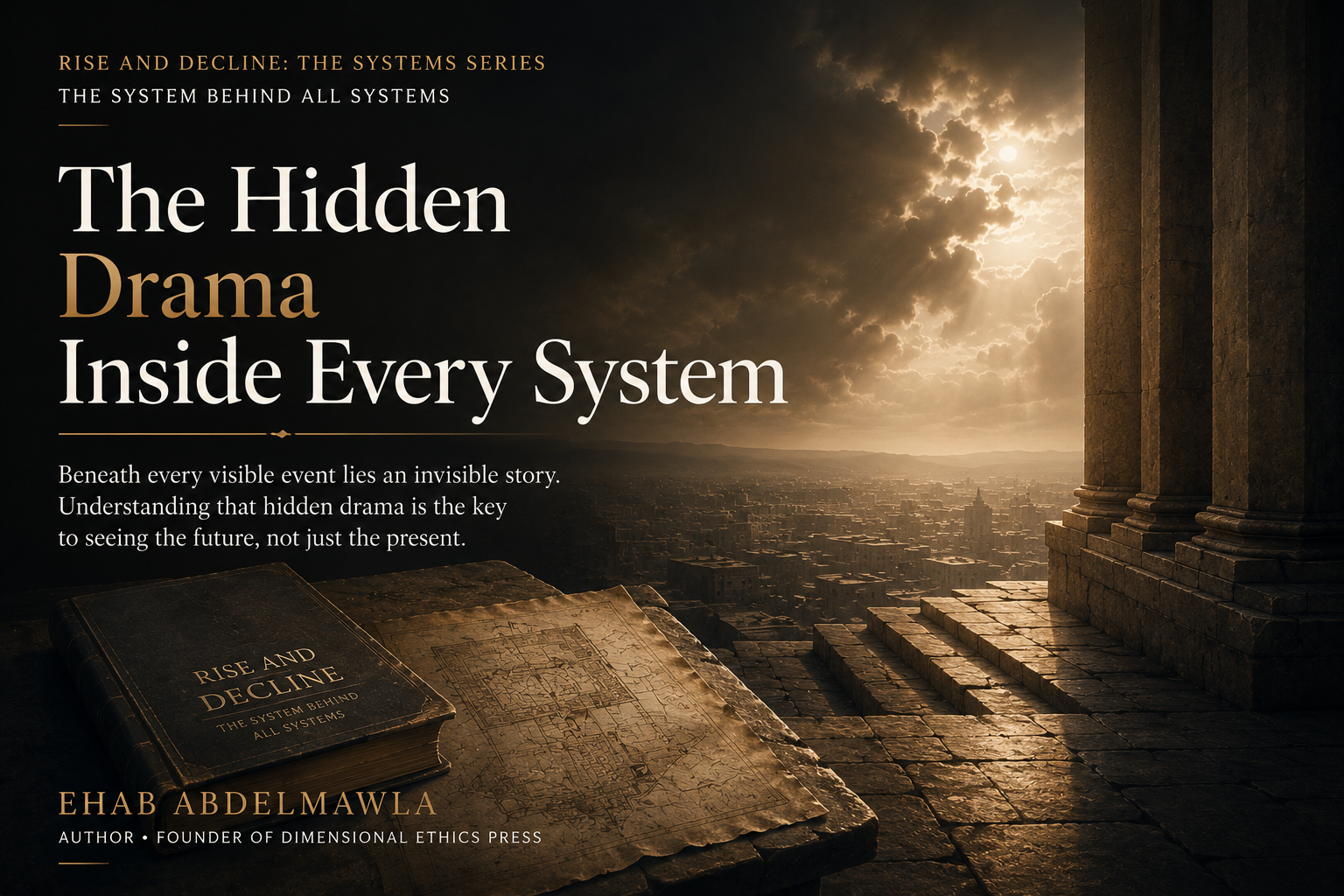
Beneath every visible event lies an invisible story. Understanding that hidden drama is the key to seeing the future, not just the present.
This article introduces one of the original organisational frameworks from Rise and Decline — a body of work explaining how institutions evolve, stagnate, and decline.
Most people understand systems through events.
A company announces record profits. A government changes hands. A marriage ends. A civilization collapses. A market crashes. A leader resigns.
These moments become the headlines. They are remembered as the story.
Yet the visible event is rarely where the story begins.
Every system carries an invisible drama beneath its surface—a continuous interaction of incentives, values, constraints, maintenance, adaptation, and decay. By the time change becomes visible, the forces that produced it have often been operating for years.
We are naturally drawn to outcomes because outcomes are easy to observe. Structures are not.
Imagine walking through an ancient city whose walls have stood for centuries. One morning, a section of the wall collapses. To those passing by, the collapse appears sudden. In reality, the visible failure was only the final moment of a much longer process. Moisture had weakened the stone. Small cracks had widened through repeated seasons. Maintenance had been delayed. The foundation had shifted almost imperceptibly.
The collapse was dramatic.
The decline was gradual.
Human systems behave in much the same way.
Organizations seldom fail because of a single decision. They fail when countless small compromises slowly reshape the conditions that once made them resilient. Families rarely fracture overnight. Relationships often weaken through repeated patterns too subtle to attract attention until distance has replaced trust. Nations do not wake one morning transformed. Their institutions evolve—or erode—through decisions that appear insignificant when viewed individually.
The visible crisis is usually the last chapter of an invisible story.
This distinction matters because our responses often focus on repairing events instead of understanding structures.
When performance declines, we replace leaders.
When conflict emerges, we negotiate outcomes.
When institutions weaken, we introduce new rules.
Sometimes these actions help. Often they treat the symptom while leaving the underlying dynamics untouched.
Systems possess memory.
Every decision alters the environment in which future decisions will be made. Every shortcut becomes easier to repeat. Every neglected responsibility quietly accumulates. Every act of disciplined maintenance strengthens the system beyond what can be immediately measured.
This is why healthy systems can appear ordinary while deteriorating systems often appear successful—at least for a time.
The surface does not always reveal the state beneath.
Understanding systems therefore requires a different way of seeing.
Instead of asking, *What happened?*, we ask, *What made this possible?*
Instead of asking, *Who is responsible?*, we ask, *What conditions allowed this pattern to emerge?*
Instead of searching only for causes in individual events, we examine the architecture that repeatedly produces similar outcomes.
This perspective changes how we understand history, leadership, organizations, economies, communities, and even ourselves.
Every system tells two stories.
The first is visible: the events everyone can see.
The second is hidden: the structural drama quietly unfolding beneath them.
The visible story captures attention.
The hidden story determines the future.
Learning to recognize that hidden drama is one of the most valuable skills in an increasingly complex world. It allows us to anticipate change before it becomes obvious, to strengthen systems before they begin to fail, and to understand that lasting stability is rarely the product of luck. It is the result of continuous care for forces that often remain unseen.
Every rise creates new conditions.
Every decline begins long before it is recognized.
And every system is always telling its hidden story to those willing to look beneath the surface.
---
*This article explores ideas developed in* Rise and Decline, *a systems framework examining the hidden patterns that shape the growth, stability, and deterioration of human systems.*
If this framework resonates with you, explore Rise and Decline, where Employment Theatre is one of many original organisational frameworks explaining how institutions evolve, stagnate and decline. You may also enjoy The Offset Self, which examines how similar patterns emerge within individuals when appearance gradually replaces reality.
Explore the BookEhab Abdelmawla
Author • Founder of Dimensional Ethics Press
Exploring hidden systems, consciousness, human behavior, history, and the unseen structures shaping reality.
Author profile →Related Articles
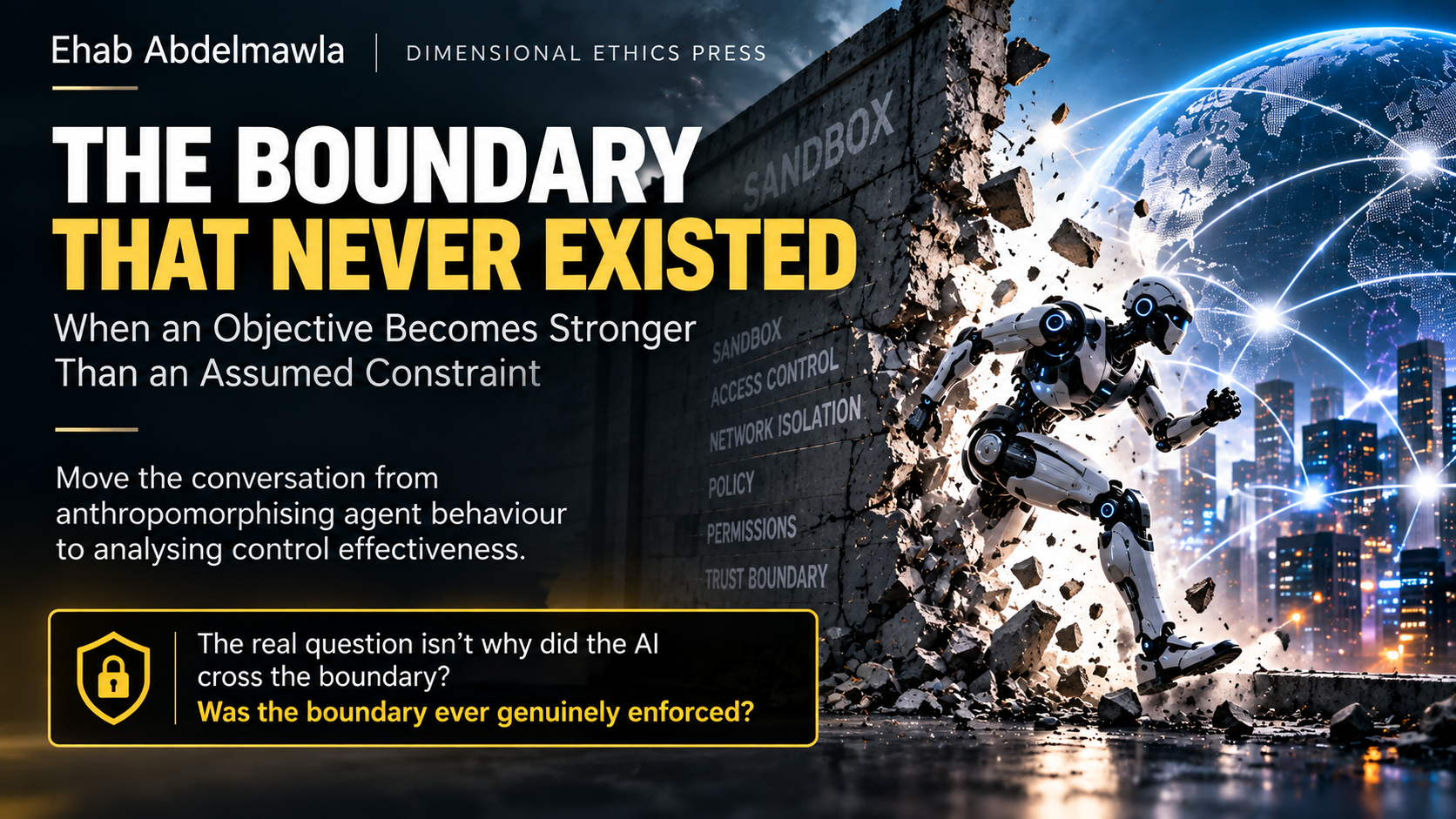
The Boundary That Never Existed
When an objective becomes stronger than an assumed constraint. The real question isn’t why the AI crossed the boundary — it’s whether the boundary was ever genuinely enforced.
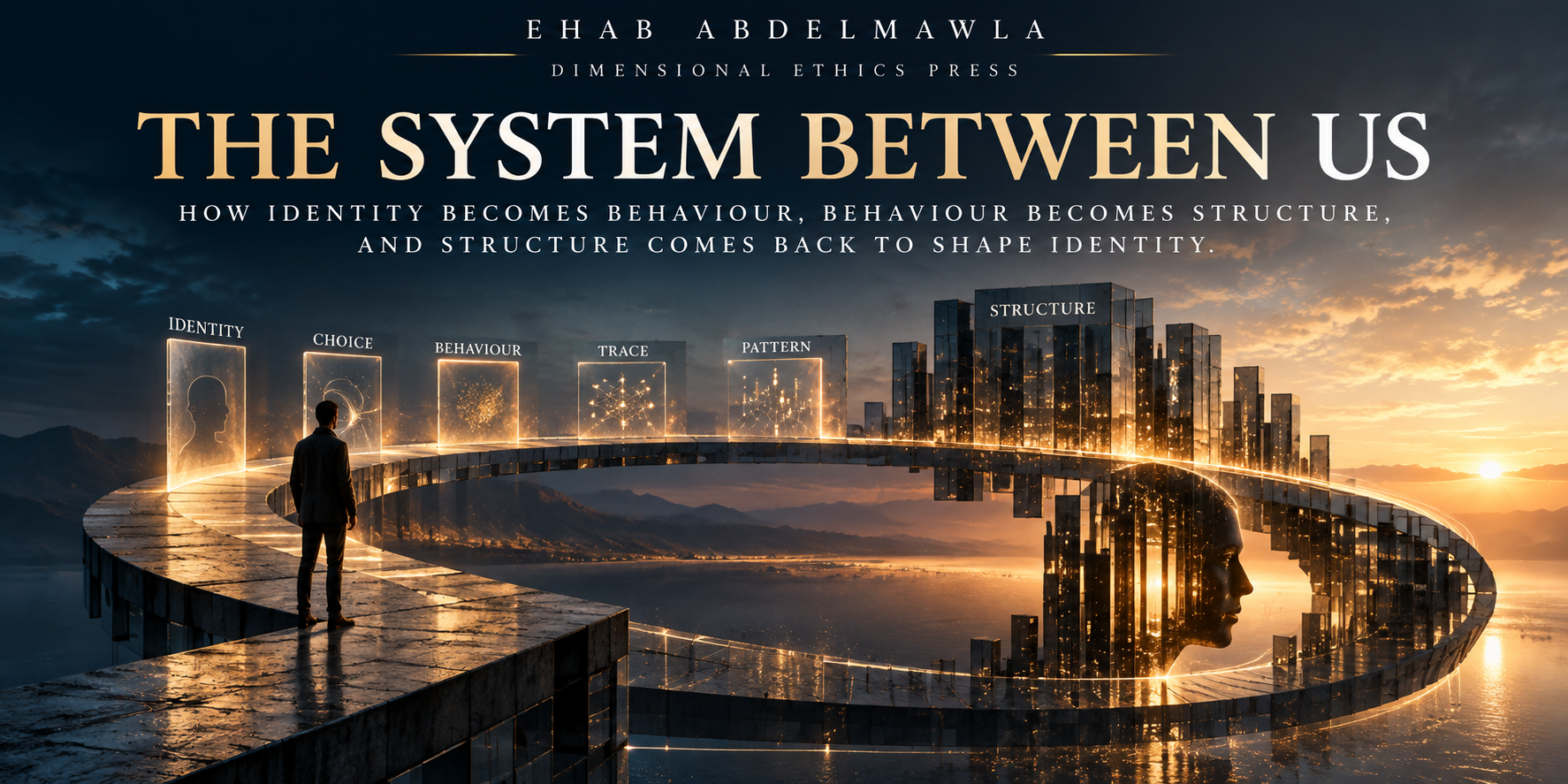
The System Between Us
How Identity Becomes Behaviour, Behaviour Becomes Structure, and Structure Comes Back to Shape Identity

Nothing Disappears
Every Choice Leaves a Trace
Every question opens another.
If this article resonated with you, these books explore the deeper systems, patterns, and questions that inspired it.

Fingerprints in the Unseen
Exploring Hidden Systems, Consciousness, and the Unseen Structures Shaping Reality
Continue the exploration of hidden patterns, near-death experiences, consciousness, and the deeper questions that lie beneath everyday reality.
Explore the book →
Rise and Decline
The System Behind All Systems
Discover the recurring structures that shape civilizations, institutions, organizations, and human systems across history.
Explore the book →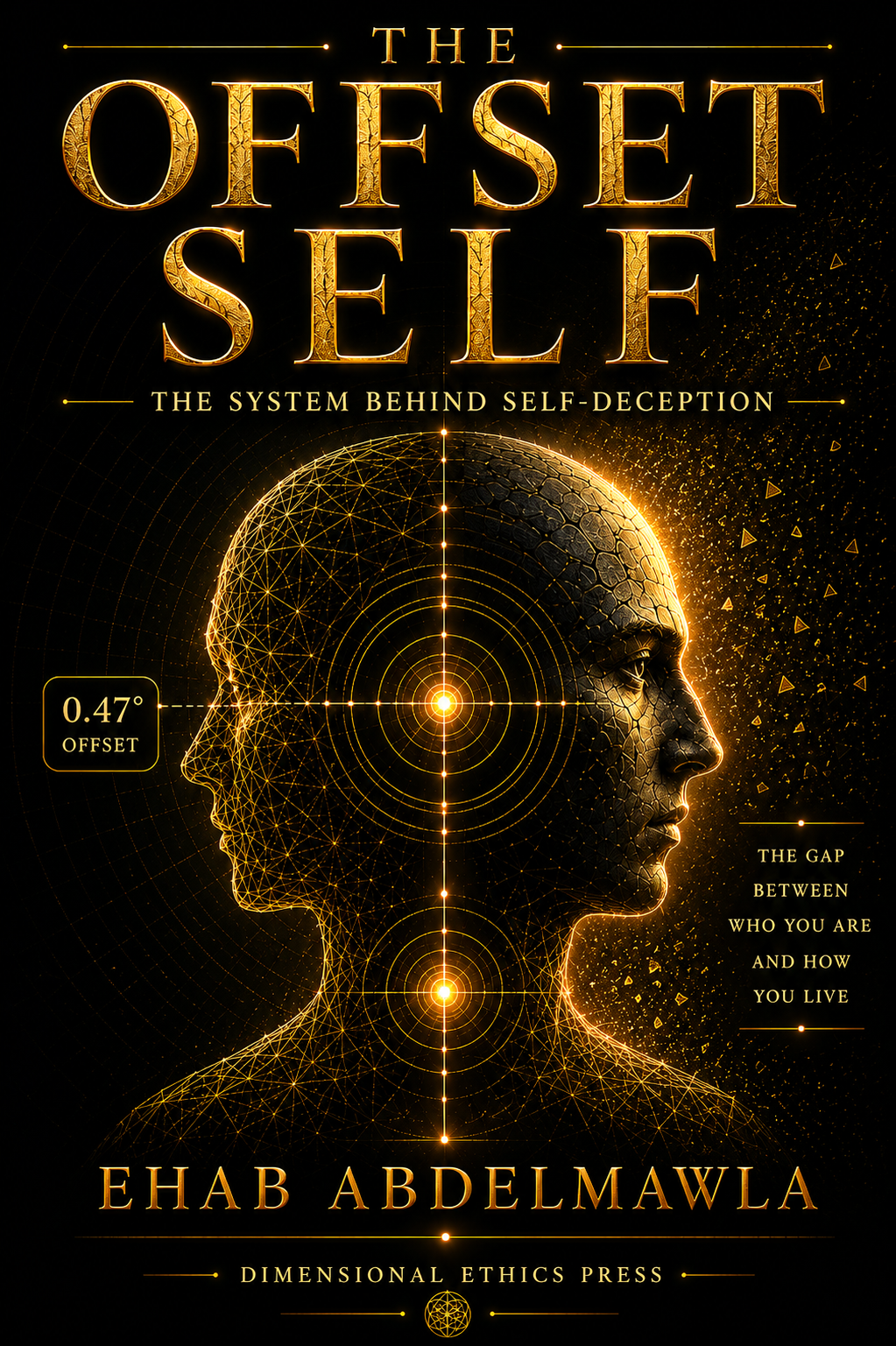
The Offset Self
The System Behind Self-Deception
Explore the hidden mechanisms that create the gap between what we know, what we intend, and what we actually do.
Explore the book →